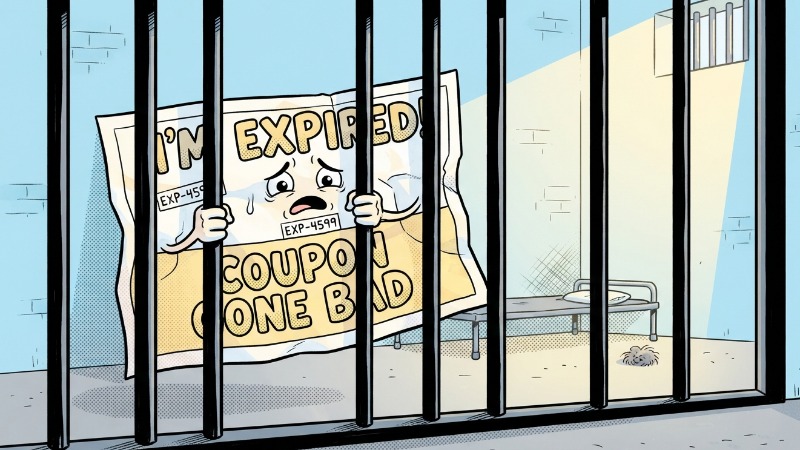
In a previous article I spoke about the positive effects coupons can have upon a brand and closing a sale. Now I'm going to cover some of the potential negative effects when they are implemented poorly. Here is some of the psycology behind coupons that hit poorly.
Reference‑price erosion
Once a discount becomes the norm, full price starts to feel like the exception and the exception feels like a ripoff. You've trained your own customers to expect the lower number[2][6].
You might be courting the wrong customer
Deal‑prone shoppers are, by definition, the ones most likely to chase a better deal elsewhere [3][4]. A coupon can attract a buyer who'll never come back at full price.
Brand image risk
Over‑discounting. Especially surprise, unplanned discounting can quietly erode perceived quality and the equity you've built [5]. There's a floor. 93% of digital coupon users say an offer has to be at least 10% off to feel worthwhile [1]. A token 5% code can do more harm than good, because it signals the brand didn't value the customer enough to make the deal real.
So, what actually works?
Strip it back and the playbook is pretty clear:
- Use the strikethrough price on purpose. It's the anchor that makes the coupon feel like a win.
- Frame it as a saving, not a lower price.
- Lean on "free" where you can. BOGO, free shipping. It's the strongest lever in the kit.
- Make scarcity real. A genuine deadline or a genuine quantity limit works. A fake one erodes trust.
- Personalize when you can. The feeling of being seen is worth more than the discount.
- Use the coupon to lower the risk of a first try, not just to cut the price.
- Capture the email. The coupon is a data tool as much as a price tool.
- Don't over‑discount. Protect the reference price and the brand.
References
1. Capital One Shopping. (2026). Coupon Statistics: Usage & Behavior Change Data. https://capitaloneshopping.com/research/coupon-statistics
2. NeuroLaunch. (n.d.). Psychology of Discounts: Influencing Consumer Behavior. https://neurolaunch.com/psychology-of-discounts/
3. IJRIAR. (2019). Influence of Deal Proneness on Consumers Brand Loyalty and Switching. https://www.ijriar.com/docs/2019/2019-dec/IJRIAR-11.pdf
4. JSTOR. The Deal-Prone Consumer. https://www.jstor.org/stable/3149982
5. Biotory. (n.d.). The Dark Side of Unplanned Discount Promotions.https://www.biotory.org/publisharticles_uploads/The%20Dark%20Side%20of%20Unplanned%20Discount%20Promotions%20Galley%20Proof.pdf
6. ScienceDirect. (2020). The effect of permanent product discounts and order coupons on purchase behavior. https://www.sciencedirect.com/science/article/pii/S0022435920300890